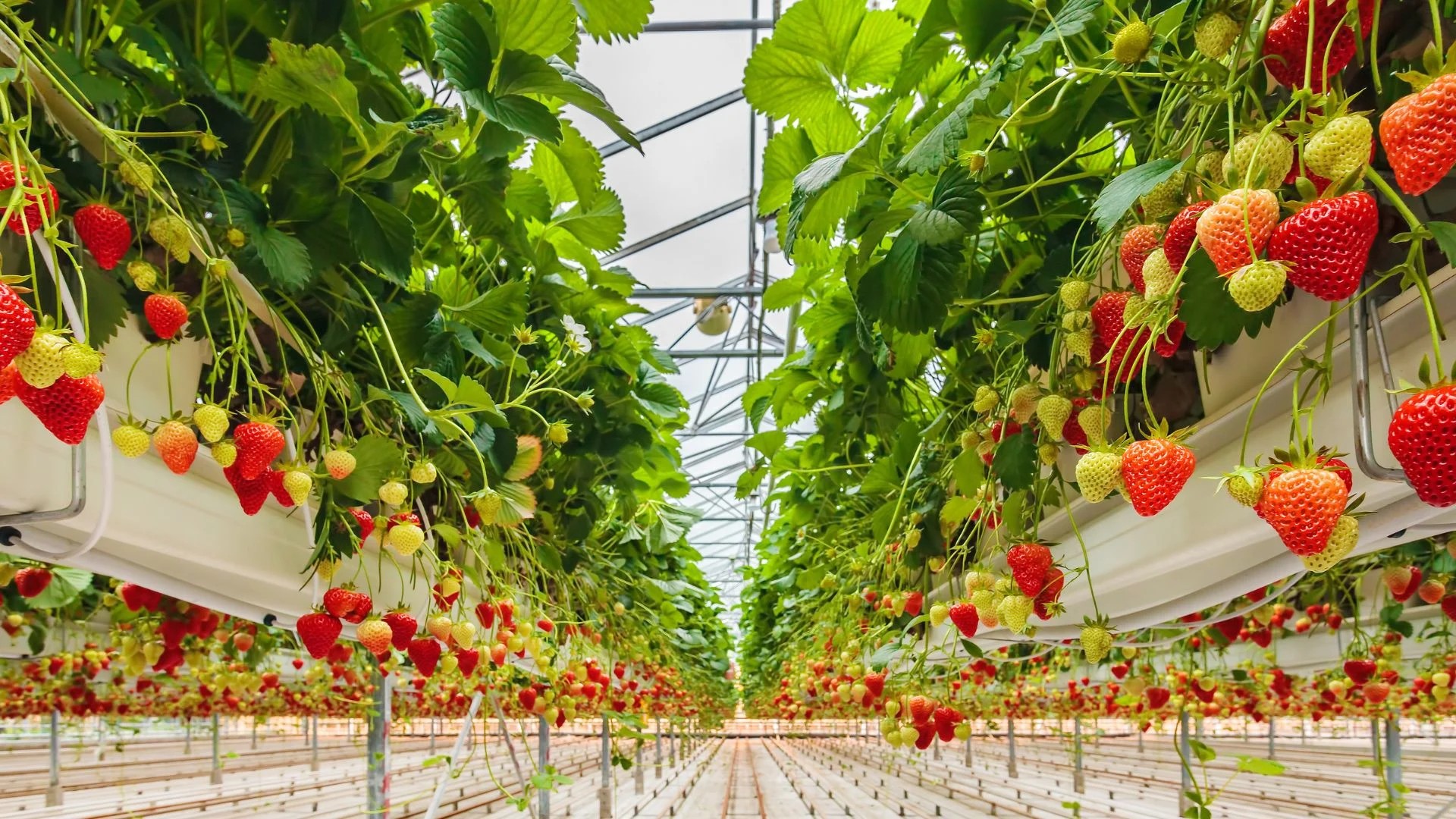
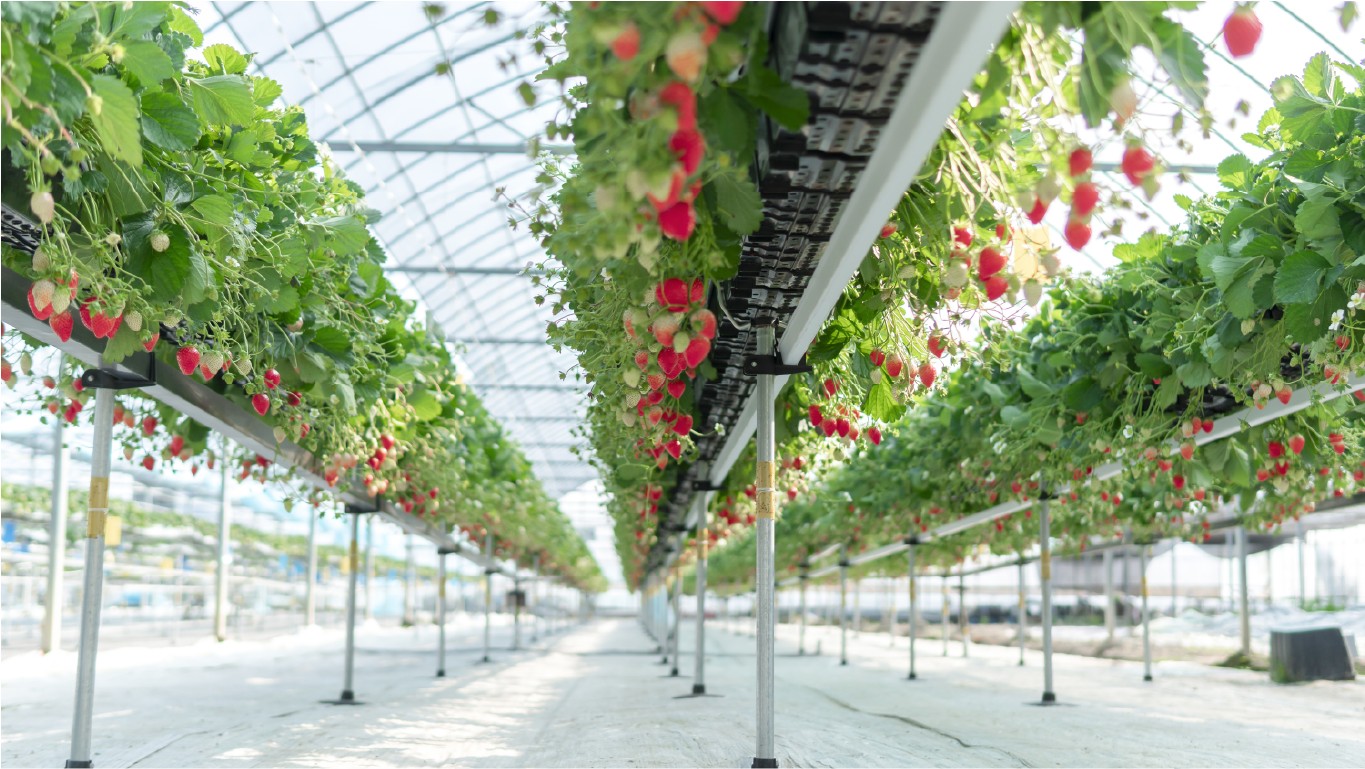
Strawberries rank among the most profitable yet high-risk fruits in global horticulture—outdoor farming is constrained by seasonal limits, weather volatility, and pest threats, often causing supply gaps and inconsistent quality. For overseas commercial growers and exporters, vertical greenhouse strawberry cultivation (hanging trough system) is a game-changer: it unlocks year-round production, maximizes space efficiency, and delivers uniform, premium berries that meet strict EU, US, and Southeast Asian market standards.
What Is Vertical Hanging Strawberry Cultivation in Greenhouses?
This system uses elevated, suspended troughs/pots in controlled greenhouse environments to grow strawberries vertically (instead of traditional ground planting):
Hanging Trough Design: Troughs are mounted on greenhouse frames, keeping plants off the ground to reduce disease risk.
Vertical Layout: Leverages upper greenhouse space to double/triple planting density without expanding land area.
It’s especially ideal for overseas growers facing land scarcity (e.g., Netherlands, Japan) or seasonal limitations (e.g., Canada, Northern Europe).
Core Advantages for Overseas Growers
1. Year-Round Harvest & Off-Season Premiums
Outdoor strawberries have a 2–3 month harvest window, but greenhouse vertical systems enable 10–12 months of continuous production:
Temperature Regulation: Maintains 18–25°C (day) & 10–15°C (night)—optimal for flowering/fruiting, even in winter.
Supplemental Lighting: LED grow lights extend photoperiods in low-light regions (e.g., Scandinavia), ensuring steady berry development.
Exporters can supply fresh strawberries to off-season markets (e.g., North America in winter) at 20–30% higher prices.
2. Space Efficiency & 2x Higher Yield
Vertical hanging systems use 2–3x more greenhouse space than ground planting:
A 1000㎡ greenhouse can grow 15,000+ plants (vs. 5,000–8,000 with ground methods).
Vertical layout avoids shading, boosting photosynthesis to increase per-plant yield by 30–50%.
Dutch vertical farms report 20–25 kg of strawberries per ㎡ annually—far exceeding outdoor yields.
3. Premium Quality & Global Market Compliance
Greenhouse control ensures berries meet strict export standards:
Precision Fertigation: Drip systems deliver exact water/nutrient doses, producing uniform 25–30g berries with 10–12° Bx sugar content.
Pesticide-Free Cultivation: Physical barriers + biological controls meet EU organic certification & US FDA food safety rules.
4. Reduced Labor Costs
Hanging troughs are at waist/chest height:
No bending during harvesting/maintenance, cutting labor time by 40%.
Automated systems minimize manual work—critical for labor-costly regions (e.g., Western Europe, Australia).
Ideal Overseas Scenarios
Land-Scarce Regions: Netherlands, Japan (maximize small greenhouse spaces).
Cold Regions: Canada, Northern Europe (year-round production avoids winter shortages).
High-End Markets: EU, US, Japan (premium berries command premium prices).
For overseas strawberry growers, vertical greenhouse cultivation isn’t just a method—it’s a strategic way to secure consistent profits, meet global demand, and stand out in competitive markets.